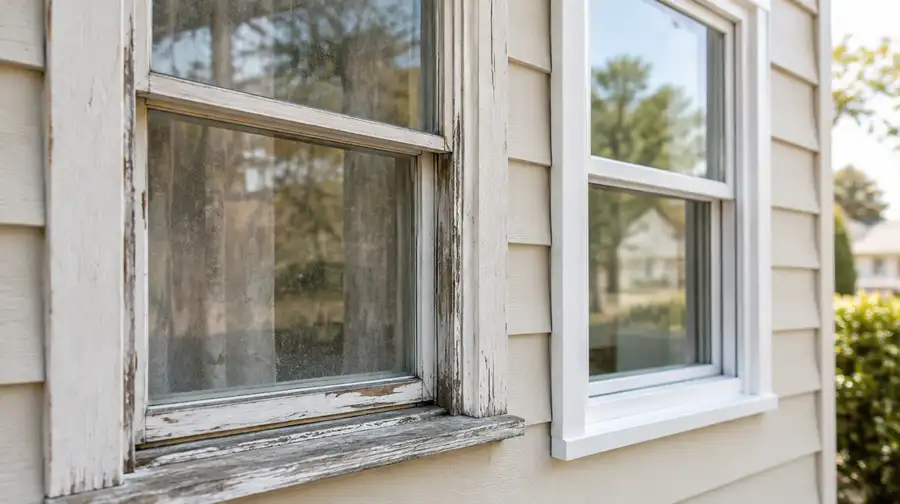
Most replacement windows last 15 to 30 years, and well-installed, higher-quality units can push past 40. That's a wide range on purpose: a window's real lifespan depends less on its age and more on how it was installed, what it's made of, and how much weather and sun it's absorbed since the day it went in. Here's what actually drives that number, and how to tell when your own windows are closer to the end than the middle.
What determines how long a replacement window lasts
Four factors matter more than the calendar:
- Installation quality. A window sealed and flashed correctly around the frame keeps moisture and air out for decades. One installed with gaps or a rushed seal can start failing within a few years, no matter how good the window itself is.
- Material and build quality. Frame material, glass package, and hardware grade all affect how a window ages, and entry-level and premium versions of the same material can perform very differently over time.
- Climate and sun exposure. South- and west-facing windows take more direct UV and heat cycling, which stresses seals and frame materials faster than a shaded, north-facing window in the same house.
- Maintenance. Windows that get occasional cleaning, lubricated hardware, and resealed caulking last meaningfully longer than ones left untouched for 20 years.
What the data says about when homeowners actually replace
This Old House's 2026 Windows Survey, a survey of 1,000 U.S. homeowners, found aging windows were the single biggest reason people replaced them, cited by 22% of respondents. Damaged frames or sills followed at 21%, cracked or broken glass at 18%, wanting better energy efficiency at 11%, and condensation between panes at 9%. The same research found most homeowners who replaced windows did so once their home was more than 20 years old, suggesting a lot of original windows get real use well into their second and third decades before anything forces the decision.
That lines up with the realistic range: windows rarely fail all at once. They degrade gradually, through a worse draft each winter or a slightly higher energy bill each year, until one of those problems becomes the reason to finally call a contractor.
Signs your windows are nearing the end, regardless of age
A window's age is a rough guide, not a verdict. Watch for these signs instead:
- Condensation or fogging between the panes. This means the seal inside a double or triple-pane window has failed and let humid air into the space between the layers of glass, according to the National Fenestration Rating Council (NFRC), the organization behind window energy performance labels. Once that happens, cleaning won't help. The window needs replacing.
- Visible frame damage. Cracking, warping, or soft spots, especially on wood frames, mean the structure itself is compromised.
- A noticeable draft even with the window fully closed. This can sometimes be a hardware or weatherstripping fix, but paired with other signs it usually points to the window reaching the end of its service life.
- Energy bills that have crept up with no other explanation. Degraded seals and aging glass packages lose efficiency gradually, and the cost shows up on your utility bill before it shows up anywhere else.
Our guide on signs you need new windows walks through how to tell these apart from problems a repair can actually fix.
How to get more life out of the windows you have
A few habits add real years to a window's service life:
- Clean the tracks and weep holes once or twice a year so water drains properly instead of sitting against the frame.
- Reseal exterior caulking when it starts to crack or pull away, before water gets behind the trim.
- Lubricate hardware like cranks, hinges, and locks so they don't bind or wear out early.
- Repaint or reseal wood frames on the schedule the manufacturer recommends, since wood is the material most sensitive to skipped maintenance.
None of this is a substitute for replacement once a seal has actually failed or a frame is structurally damaged. For anything beyond basic cleaning and resealing, a licensed contractor can tell you whether a repair is worth doing or whether you're better off putting that money toward a new window.
What this means for your next decision
If your windows are showing one or two of the signs above, it's worth getting an honest read on whether repair or replacement makes more sense before you spend money either way. With the average full replacement project now running $7,183 for about seven windows, per This Old House's 2026 survey, it's worth knowing which category your situation falls into rather than guessing. A free quote from a local contractor gives you that answer directly, and WindowsRenew connects you with trusted local contractors in your area rather than a flood of calls from companies you didn't ask to hear from. If you're also weighing what frame material to go with for your next set of windows, our vinyl vs. fiberglass vs. wood comparison breaks down how each one tends to hold up.
References
- This Old House: 2026 Windows Survey of 1,000 U.S. homeowners, reasons for replacing windows, home age at time of replacement, and average project cost
- National Fenestration Rating Council: how sealed insulating glass units fail and what causes condensation between panes
- Fenestration and Glazing Industry Alliance: industry testing standards for window air leakage, water penetration, and structural performance over time
- ENERGY STAR: window energy performance certification and how aging affects efficiency
Ready to get started?
Get a free, no-obligation quote from a trusted local window replacement contractor. Takes about 2 minutes.
Get My Free Quote